If Bangkok is Thailand's energy, Chiang Mai is its soul. The 700-year-old former capital of the Lanna Kingdom sits in a green valley surrounded by jungle-covered mountains in the country's far north. It's slower, leafier, cooler and far more livable than the megacity to the south — which is why digital nomads, retirees, food obsessives and culture-seekers come and never quite leave.
This guide will give you everything you need to plan a smooth 3–5 day visit, with specific recommendations for temples, day trips, ethical elephant sanctuaries, the famous night markets and the neighbourhoods where you'll feel most at home.
When to visit Chiang Mai
The short version: November to February is peak season — cool, dry and clear. Days hover around 28°C, nights drop to a refreshing 15°C, and you'll see the mountains for miles.
March to May is hot (sometimes 38°C+) and, worse, it's burning season. Local farmers burn agricultural land and the air quality regularly hits hazardous levels. If you're sensitive to air quality, avoid these months in Chiang Mai entirely.
June to October is the rainy season — short, heavy afternoon downpours followed by sunshine. The landscape is the greenest of the year, prices drop, and the city is significantly less crowded.
How many days do you need?
3 days is enough for the major temples, a day trip and one good market night. 4–5 days lets you add a proper day-trip to Doi Inthanon, an ethical elephant sanctuary visit and a half-day cooking class. A week is genuinely lovely — you'll start to feel local.
Where to stay
- The Old City — inside the moat. Walking distance to most temples, lots of guesthouses and cafes. Great for first-timers.
- Nimmanhaemin (Nimman) — the trendy district. Coffee shops, boutiques and modern restaurants. Perfect for digital nomads.
- Wat Ket / Night Bazaar — east of the river. Closer to the night markets and a slightly more local feel.
- Riverside — quiet, residential, with some lovely heritage hotels.
Top temples to visit
Doi Suthep (Wat Phra That Doi Suthep)
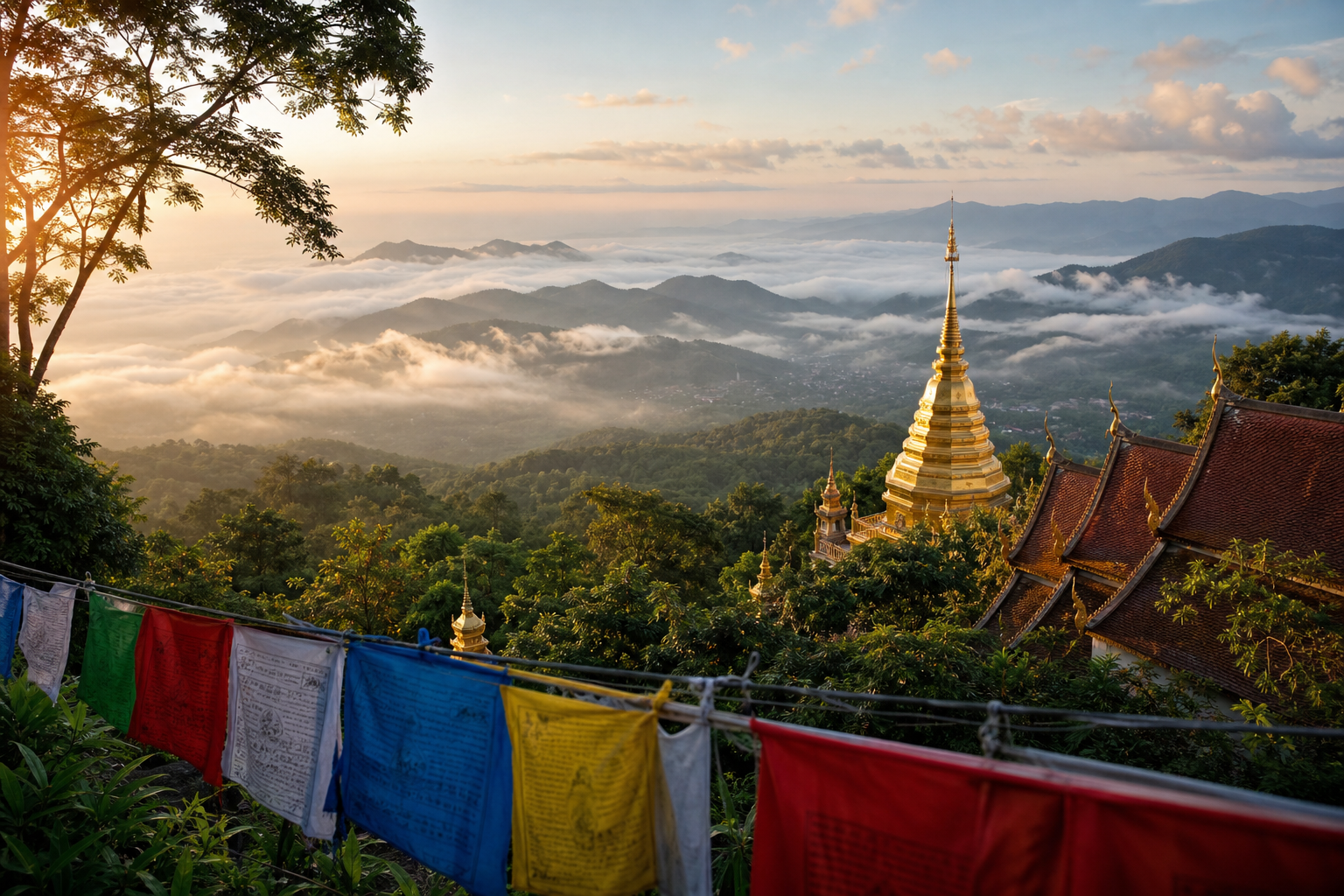
The single most important temple in northern Thailand sits at 1,073 metres on a mountain overlooking the city. The golden chedi is mesmerising and the panoramic views from the terrace are unforgettable. Hire a red songthaew (about 200 baht round trip from the Old City) or rent a scooter. Go early morning to avoid coach tours.
Wat Phra Singh
Old City. The most important temple inside the moat, home to the revered Phra Singh Buddha. Best photographed from outside at golden hour when the gold leaf glows.
Wat Chedi Luang
Old City. A massive 14th-century brick chedi partially destroyed by an earthquake in 1545. The ruin somehow makes it more powerful than any restored temple.
Wat Umong
South-west of the city. A unique 700-year-old forest temple with tunnels cut into a hillside, a serene pond and resident monks happy to chat with visitors.
Wat Phra That Doi Kham
Lesser-visited mountain temple in the southwest with a 17-metre seated Buddha. Better views and far fewer tourists than Doi Suthep.
The best things to do in Chiang Mai
1. Visit an ethical elephant sanctuary
This is the experience most travellers remember most. Critical: only visit sanctuaries that genuinely rescue elephants — no riding, no chains, no performances. Reputable options include Elephant Nature Park (Lek Chailert's pioneering sanctuary), BEES, Boon Lott's Elephant Sanctuary, and Karen Tribe Native Elephants. Half-day visits cost 1,500–2,500 baht; full-day around 2,500–3,500 baht.
2. Take a cooking class
Chiang Mai is arguably the best place in Thailand to learn to cook Thai food. Schools like Thai Farm, Asia Scenic and Sammy's Organic Thai run half- and full-day classes (including market tour) for 1,000–1,500 baht.
3. Wander the Sunday Walking Street
Every Sunday from 4 pm, Ratchadamnoen Road in the Old City closes to traffic and fills with hundreds of artisan stalls, street-food vendors and live musicians. Crafts here are generally better quality than at the Night Bazaar.
4. Hike or drive Doi Inthanon
Thailand's highest peak (2,565 m), a 90-minute drive south. The summit is forested and often misty; the twin chedis halfway up offer dramatic views; and the easy Kew Mae Pan nature trail is one of the country's most beautiful walks.
5. Old City night markets
The Saturday and Sunday Walking Streets are the biggest, but the daily Night Bazaar on Chang Klan Road is a tourist institution. The smaller, livelier Wararot Market is where Chiang Mai locals actually shop.
6. Eat Khao Soi in its hometown
Northern Thailand's signature noodle dish — yellow egg noodles in a creamy coconut curry with crispy noodles on top. Khao Soi Khun Yai (closes by 1 pm) and Khao Soi Mae Sai are local legends.
7. A morning at a traditional Lanna spa
Lila Thai Massage (run by ex-prisoners as a rehabilitation programme), Fah Lanna Spa, and Oasis Spa Lanna are all excellent. A 2-hour traditional Thai massage costs 500–900 baht.
8. Cycle around the moat
Rent a bicycle for 50–100 baht/day and ride the perimeter of the moat at sunrise. You'll see the Old City wake up — orange-robed monks collecting alms, vendors setting up for the day, and the temples lit by soft morning light.
Excellent day trips
- Chiang Rai & the White Temple — 3 hours each way. Long day, but Wat Rong Khun (the white temple) and Wat Rong Suea Ten (the blue temple) are unique pieces of contemporary religious art.
- Mae Sa Valley & Mok Fah waterfall — 1 hour. Mountain scenery, hot springs, butterfly farms, orchid gardens.
- Pai — 3-hour winding mountain drive that's an experience in itself. A small bohemian hill town with hot springs and waterfalls; best as an overnight rather than a day trip.
- Bo Sang Umbrella Village — 30 min. Watch artisans hand-paint paper umbrellas. Touristy but charming.
Practical tips
- Get a Grab or red songthaew app. Songthaews (shared red trucks) cost 30–60 baht per ride inside the Old City and Nimman.
- Rent a scooter only if you've ridden before — the mountain roads are no place to learn.
- Carry cash. Most temples accept donations only, and street food vendors don't take cards.
- Dress respectfully at temples — covered shoulders and knees, shoes off inside.
- Bring a light jacket from November to February — evenings can drop to 12°C in the mountains.
Don't forget your TDAC
If you're flying directly into Chiang Mai International Airport (CNX), you still need to file the Thailand Digital Arrival Card before you land. Our assisted TDAC service takes care of it in minutes.